A 23.5-liter backpack is not automatically too big for the office. For many people, it is a practical middle ground: enough room for a laptop, charger, notebook, lunch, and a light layer without moving into full-size travel-pack territory. But liters alone don’t tell you whether a bag will look oversized in a conference room, feel comfortable on a crowded commute, or fit beneath an airline seat.
The better question is whether the backpack’s actual dimensions, empty weight, organization, and shape suit your daily commute carry. A structured 23.5L bag can look substantial even when it is not especially deep; a soft-sided one may compress close to the body. Here’s how to assess the size in real terms—and what to check before buying.
What Does 23.5L Look Like in Everyday Use?
Capacity is a measure of volume, not a standard set of external dimensions. Two backpacks that each claim 23.5 liters can differ in height, width, depth, shape, and usable space. One might be tall and narrow, while another is boxier and easier to pack but more conspicuous on your back.
For an office commute, 23.5L commonly accommodates a laptop and its protective sleeve, a notebook or slim folder, a charger, a water bottle, small personal items, and a light sweater or compact lunch. Whether those items fit comfortably depends on the bag’s compartment layout. A padded laptop sleeve, thick back panel, internal dividers, and rounded corners all consume space that the headline capacity may not communicate.
That’s why I treat a capacity figure as a starting point, not a packing guarantee. The 23.5L backpack size can work well for a full workday, but it may feel excessive if you carry only a laptop and wallet—or cramped if a4 document laptop bag your routine involves bulky headphones, a large lunch container, and paperwork.
Check Dimensions, Not Just Liters
Compare the bag’s listed external height, width, and depth with a backpack you already own. Depth is especially revealing: a bag that is only a little deeper than your current one may still feel bulky if its sides are stiff and hold their shape when empty. Look for dimensions both when the bag is empty and, if available, when it is packed.
Airline limits are another reason to check measurements. A backpack used as a personal item has to fit the airline’s current size rules and, in practice, the space under the seat in front of you. Southwest’s carry-on baggage policy page is a useful reference for its current baggage guidance. Confirm the latest rules directly before flying, and don’t assume a bag that qualifies as a carry-on will also qualify as a personal item. A 23.5L backpack may be fine as an everyday office bag yet too large for a particular personal-item allowance, especially if it is rigid or packed full.
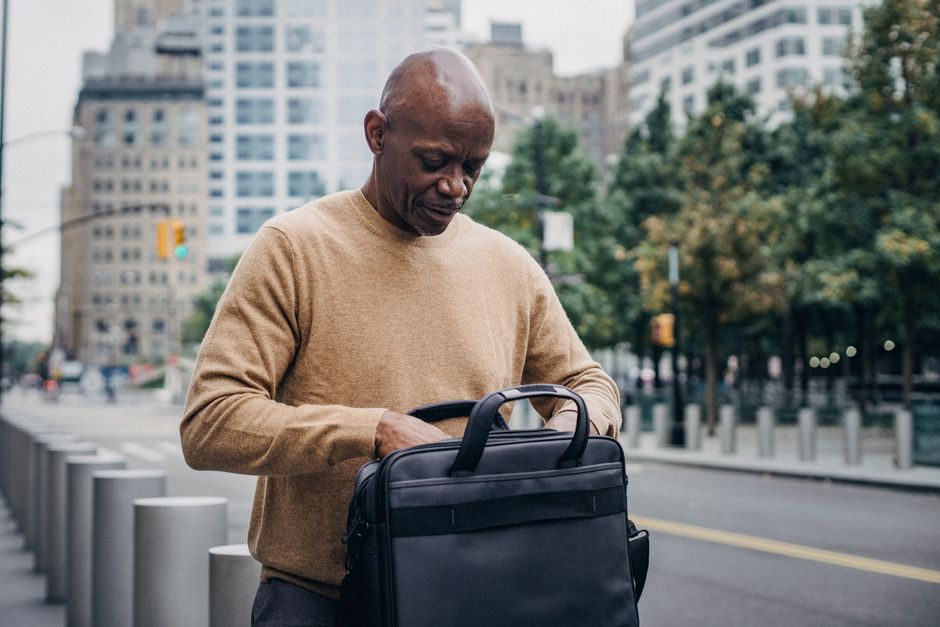
Will Your Laptop Actually Fit?
“Fits a 16-inch laptop” is not enough information by itself. Laptop screen size describes the display diagonally, not the machine’s full exterior dimensions. A 16-inch model with a thick chassis or large bezels may be a different fit from a thin 16-inch laptop. Sleeve padding and the backpack’s tapered shape can reduce the usable opening, too.
Measure your laptop’s height, width, and thickness, then compare those numbers with the backpack’s stated laptop-compartment dimensions. Check whether the compartment has a straight opening or narrows near the top. If the manufacturer lists only a maximum screen size, ask for the sleeve’s internal measurements before purchasing.
Also consider how you use the compartment. A snug sleeve can keep a computer from moving, but it should not require forcing the zipper around the corners. If you carry a laptop in a separate protective case, allow for that extra thickness. The main compartment may have room for the computer while the dedicated sleeve does not.
Count Usable Pockets
Marketing materials often make a bag sound more organized by counting every slot and sleeve as a “pocket.” For daily use, count the spaces you can reach and use without unpacking the bag. A practical office setup might include a laptop sleeve, a quick-access pocket for a phone or badge, a secure interior pocket for small valuables, and a water-bottle pocket that remains useful when the main compartment is full.
Check whether a pocket is large enough for what you actually carry. A slim zip compartment may be useful for a passport but not a charger brick. A bottle pocket that steals too much room from the main compartment may be a poor trade if you carry a lunch container every day. Layout matters more than the raw number of pockets.
Empty Weight and Comfort Matter More Than the Capacity Number
I check the empty weight before I praise a bag. That number is easy to overlook, but it affects every commute: the backpack’s weight is there before you add a laptop, water, or a change of clothes. A leather bag with a substantial frame and hardware can weigh markedly more than a soft nylon backpack of similar capacity.
Compare empty weights in the same units, and be careful about listings that omit the figure. If the manufacturer does not publish it, ask. A missing weight is not a small detail for someone who walks to a station, carries the bag through an airport, or has a long campus-style office commute.
Comfort also depends on strap width, padding, adjustment range, back-panel shape, and how the load sits. A heavy bag with narrow straps can dig in; a bag with good padding can still feel awkward if the laptop compartment pulls the load away from your back. Try the backpack with a realistic load, not just an empty showroom sample. If you can, wear it for several minutes and check whether the bottom hits your hips or swings as you walk.
Boardroom Structure and Office Aesthetics
At 23.5L, silhouette can matter as much as volume. A soft, rounded backpack may read as casual, particularly when it is packed unevenly. A structured bag keeps a cleaner profile and can look more appropriate with business clothing, but structure often adds weight and makes the backpack less forgiving under an airplane seat or in a crowded train.
For client meetings, consider the finish as well as the shape. Minimal branding, restrained hardware, and a clean front panel generally look more boardroom-ready than oversized logos, dangling straps, or multiple external compartments. A polished leather backpack can move naturally between office and travel settings; a streamlined nylon style may be the better choice if weather resistance and low weight matter more.
Brands such as Tumi and Briggs & Riley offer examples of the business-travel design language: organization, work-friendly compartments, and a more deliberate silhouette. Compare the specific model rather than assuming every bag from a brand shares the same capacity, weight, or laptop dimensions. Their names alone do not tell you whether a particular backpack is comfortable for your commute.
Material Choices: Leather, Ballistic Nylon, Cordura, and Twill
Material affects weight, appearance, weather performance, maintenance, and how a bag ages. No material makes a backpack automatically “office appropriate”; construction and design matter just as much.
Material Typical strengths What to consider Full-grain leather Distinctive natural surface, a polished look, and the potential to develop character with use Often heavier than fabric, needs care, and can show marks or wear. Ask whether the listing identifies the leather grade and lining material. Ballistic nylon Durable woven construction commonly used in travel and work bags Can feel utilitarian, and fabric weight and finish vary. “Ballistic” does not tell you the denier or the bag’s empty weight. Cordura A family of durable fabrics used in bags and outdoor gear Check the exact fabric specification and coating. The Cordura name alone does not reveal a backpack’s weight or water resistance. Twill A diagonal weave that can give a fabric bag a softer, more refined appearance Performance depends on fiber, weave, and finish; “twill” by itself is not a durability rating.For background, Wikipedia’s references on leather and leather grades, ballistic nylon, and denier can help explain the terminology. Treat them as general reading, not as a substitute for a manufacturer’s exact material specifications. Denier describes yarn linear density; it does not independently prove that a finished backpack is more durable than another one.
When shopping, look for the outer fabric, lining material, coating or finish, and empty weight. If a brand highlights premium leather but does not state the lining, or emphasizes tough nylon without naming the fabric weight, ask for specifics. Those omissions make it harder to compare bags fairly.
What About “Rowledge 2 Capacity”?
If you are comparing a search result or product listing that uses the phrase “rowledge 2 capacity,” verify what it refers to before treating it as a volume measurement. Product names, model numbers, and capacity figures are easy to confuse. Look for an explicit capacity in liters, then confirm the external dimensions and compartment measurements on the manufacturer’s product page.
The same rule applies to any model-specific comparison: do not assume a bag’s name, generation, or laptop label tells you how much usable space it has. Two versions of a backpack can change in dimensions, pocket layout, and weight even when their names look nearly identical.
Price and Value: Pay for the Details You Need
Premium materials and construction can raise a backpack’s price substantially, but the price alone does not confirm a good fit. For example, the Von Baer City Large Leather Laptop Bag is listed at $1,795. Per the article’s stated pricing policy, Von Baer never runs sales or discounts. At that price, a buyer should pay close attention to the practical specifications: empty weight, internal laptop-sleeve measurements, lining material, and the bag’s return policy.
That kind of purchase makes the most sense for someone who values leather, a tailored appearance, and a bag that can serve in formal work settings. It may be a poor choice if you prioritize a light load, frequently walk in heavy rain, or want a backpack that can be compressed for travel. Compare the total experience—not just the leather type or brand reputation.

How to Decide Whether 23.5L Is Right for You
Write down your daily load. Include the laptop, charger, bottle, lunch, notebook, and any extras you carry most days—not just occasional travel items. Check external dimensions. Compare them with a bag you know, and consider whether a structured shape will feel bulky on your commute. Verify the laptop compartment. Match its internal height, width, and depth to your actual computer, including any protective sleeve. Compare empty weights. If the weight is missing, request it before buying. Then consider how heavy the bag will be once packed. Test the pocket layout. Count only pockets you can use for your real items without sacrificing the main compartment. Check flight suitability separately. Review the airline’s current size rules for the role you need—personal item or carry-on—and measure the packed bag.Verdict: Is 23.5L Too Big?
For many professionals, no. A 23.5L backpack is a sensible capacity for a full workday, particularly if you carry a laptop, lunch, a water bottle, and a few meeting essentials. It may be too big if your daily load is minimal, the bag is unusually deep or rigid, or you need it to fit beneath an airline seat under a strict personal-item limit.
Choose based on the bag’s dimensions, laptop sleeve, empty weight, comfort, and materials—not the liter figure alone. If the backpack holds your real daily commute carry without forcing you to pack around its design, and it looks appropriate in the settings where you work, 23.5L is a useful size rather than an oversized one.